
For the August ‘favourite place’ we hear about a secret stretch of the River Waveney, the border between Norfolk and Suffolk, as Joe tells us about sailing a small dinghy between Geldeston and Bungay.
It’s impossible for me to choose one favourite spot, with the wealth of options the East Coast gives us . . . so many rivers, each with a unique appeal! I can’t have just ONE favourite. That said . . . the river Waveney has a special charm. It’s not even a new idea. The first Act of Parliament was granted in 1670, empowering local merchants to create locks and canalise the river to Bungay for trade. Although, even that was delayed. Francis Matthew, a 16th century engineer and writer presented his grand plan for the Waveney & Little Ouse to be linked, and made navigable, in 1656. They do rise at separate sides of the same field. Unfortunately, he presented the plan to Oliver Cromwell, who was busy trying to chop the King’s head off (as you do)!
I’m only going to write about the four mile stretch from Geldeston to Bungay – although I’ve been about as far upstream to source as you can get on the full, 26 mile ‘run’ that the River Waveney has. Especially as it’s reasonable to ask why would you bother to try and sail a bit of river that’s been closed since 1934?
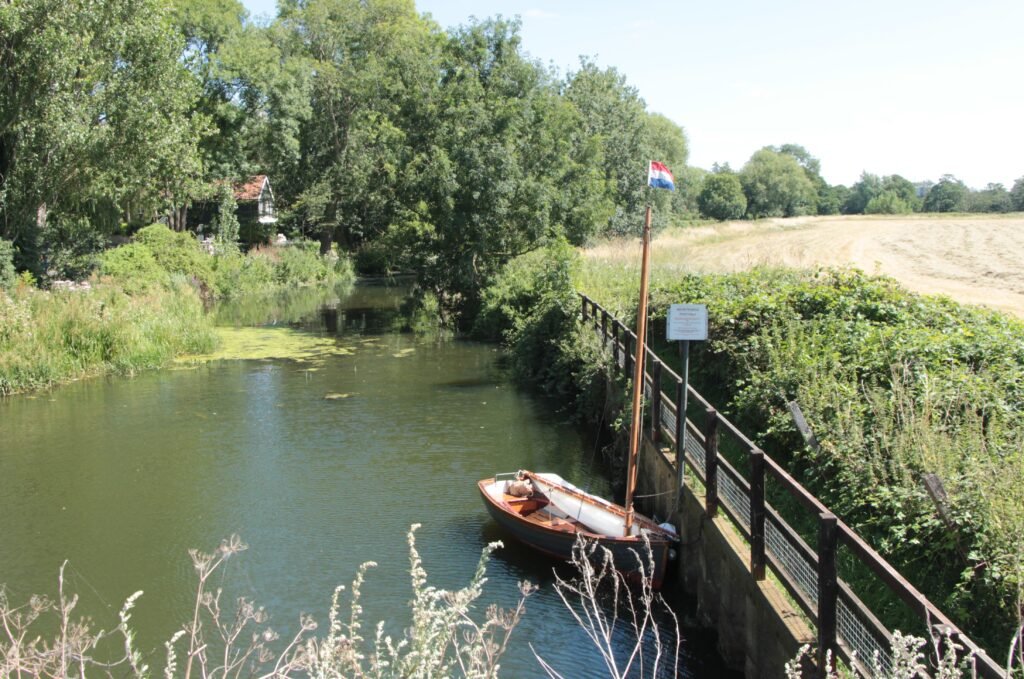
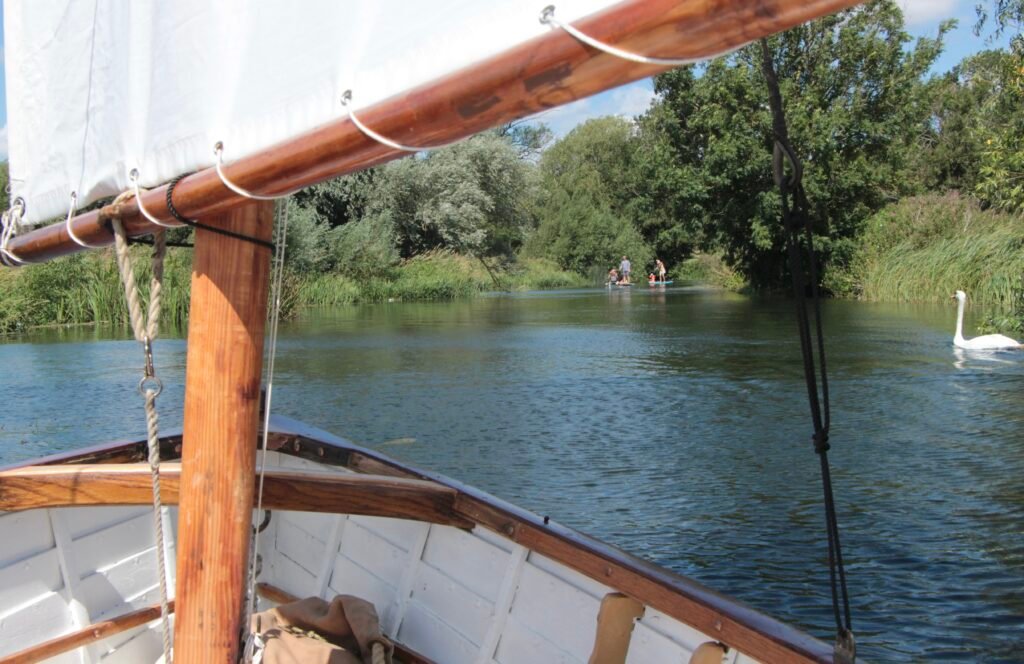
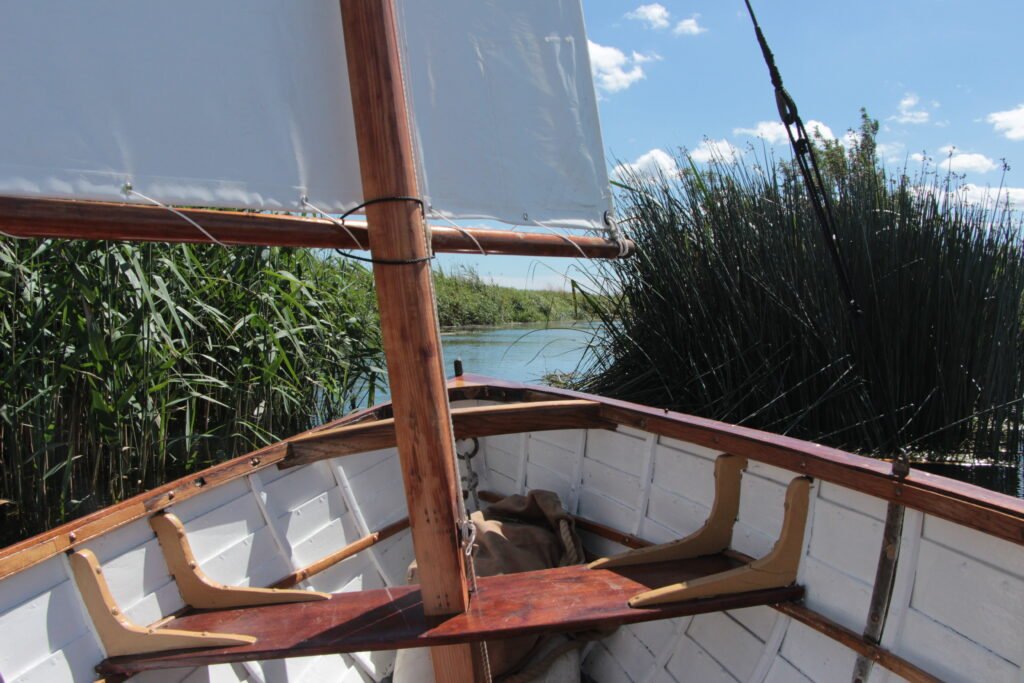
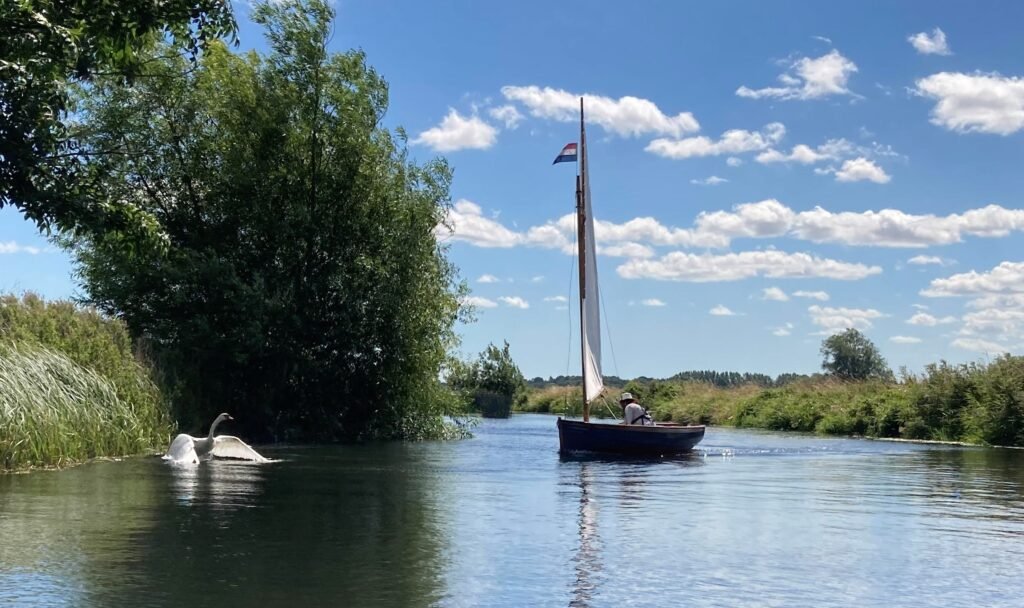
What makes this stretch so irresistible, is that it’s ‘secret’. I think I can confidently say I was the first person in 80 years to sail there. The incongruity of being so firmly in rural farmland . . . yet, in a boat, just gets my vote every time. Until the footbridge at Geldeston was updated, you had to be determined. Really determined.
First, you need to moor on the meadow, get a mooring rope and go onto the bridge. Then you’d need to lower both ends down either side of the handrail on the downstream edge. A somewhat precarious manoeuvre follows, where you’d;
– go up to the two ends of the rope by boat
– tie one end around the chains hanging from the bridge, blocking navigation (pretend you can’t read the sign ‘LIMIT OF NAVIGATION’)
– pull the other end, raising a stinking, weedy, dripping chain
– get covered in filth, pushing boat under chain
– remove rope.
And just like that, you’re guaranteed a sail on your own, secret river. For the adventurous, you can do that now without the rope, the chains having being removed.
NB I’ve managed to get round the ‘cut’ and into the lock pound at Geldeston and back onto the river. I guarantee I’ll be the last boat ever to transit the lock chamber. Anyway, once through, you now have it. A sinuous, gin-clear ribbon of water that’s yours to explore (Kenneth Grahame eat your heart out). It is a far cry from the day when you’d see two wherries sailing toward each other, being able to pass side by side, and you’ll need to avoid the ever persistent natural blocks of fallen trees, reed growth and dereliction.
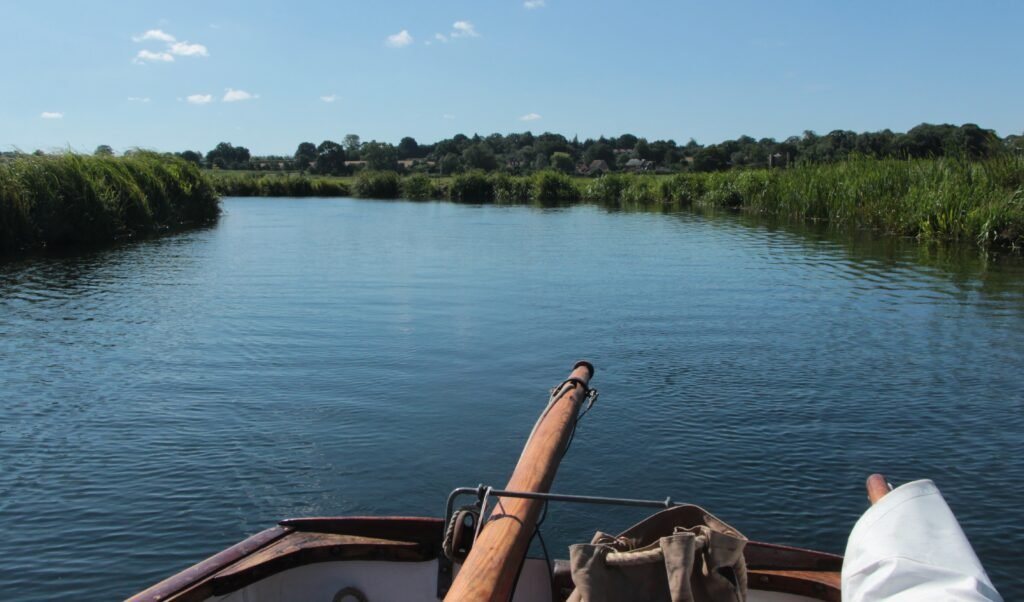
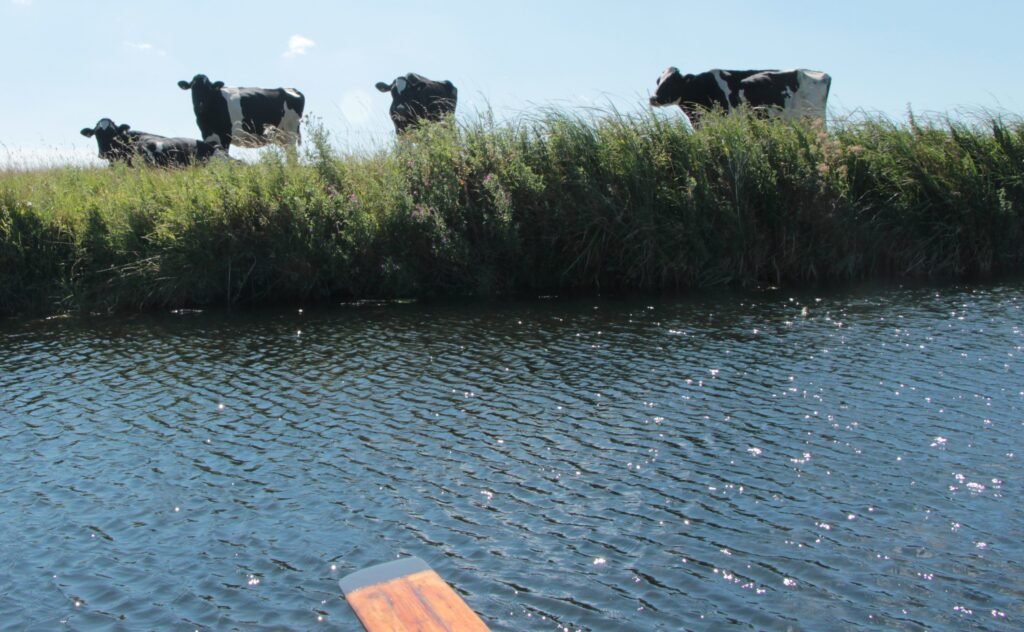
In a 12ft lugsail dinghy, I’ve managed to get to Ellingham where the bizarre spectacle of having a boat up there becomes clear. You’re amidst arable land, listening to the hum of distant farm machinery. The watermill/millers’ houses are now ‘des res’ territory. Last time I was here, I mudweighted quite happily in the millrace looking up at the edifice that is Ellingham Mill. If you really want to explore, a folding dinghy or a canoe is essential beyond this point. Any mention of ‘portage’ facilities should be taken as suggestive. Ellingham requires you to hoist your boat about 13ft up a bank, 50ft along the field, over a road (the gate might now be back in place?), a fence and then back into the water (!).
Anyway – now it’s not a secret, I’ll see if I bump into any of you up there.
Words & photos: Joe Farrow
You must be logged in to post a comment.