
Our featured boat for April is ‘Acorn’, home-built on the River Orwell and planning to sail around the UK. In these two posts, Marie-Louise recounts the passage up the East Coast of England from the Orwell to Amble, spanning our recently extended East Coast Area!
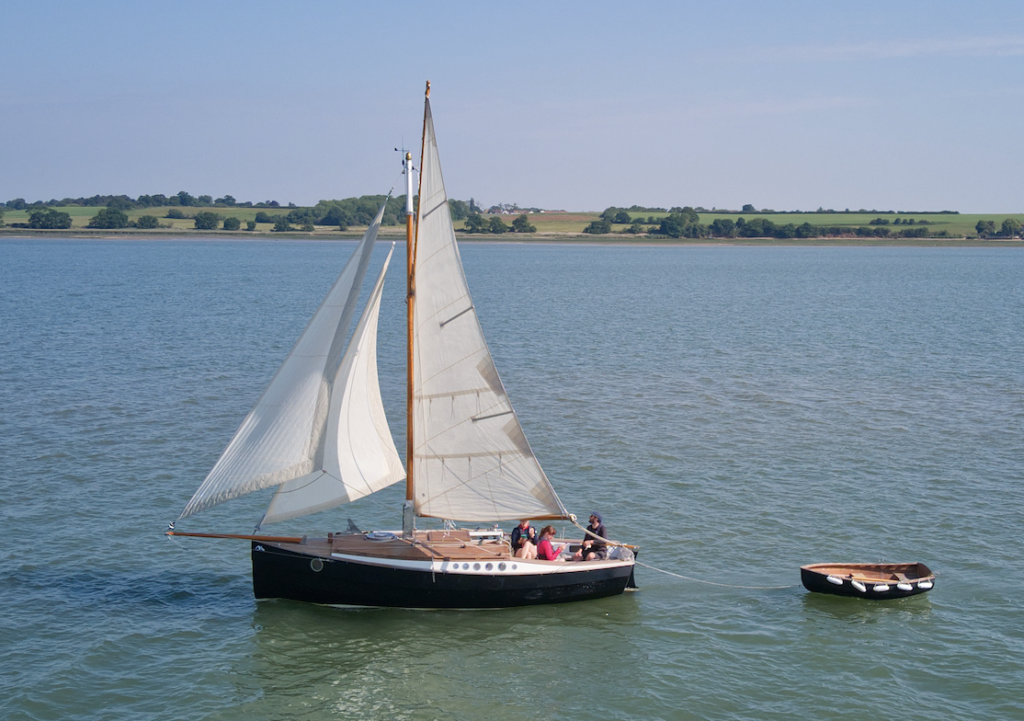
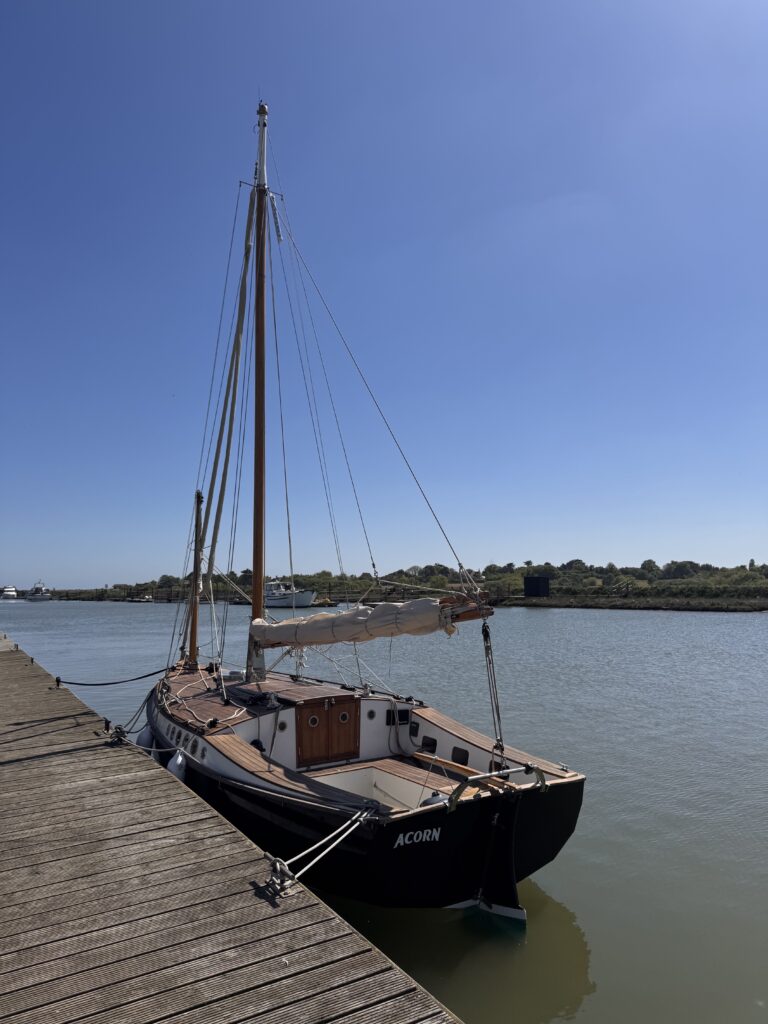
For most sailors, building a boat is a dream. For my partner Sam Francis it became a nine-year project. ‘Acorn’ is a Cape Henry 21 gaff-cutter, designed by American naval architect Dudley Dix. Sam built her himself, over evenings and weekends until she was finally declared “finished” in 2019. Like many home-built boats she is still evolving, but she has already proved herself a capable little cruiser. Under sail she behaves exactly like a small gaff cutter should: happiest once properly settled, the big mainsail drawing steadily while the bowsprit keeps everything politely balanced. Owning a boat you have built yourself changes the relationship entirely. Every fitting carries a memory of how it came together. So when ‘Acorn’ began making her way slowly around the UK coastline, it meant far more than simply going sailing. For Sam it was the chance to circle Britain in a wooden boat he built with his own hands. This stage of the voyage began from our usual waters on the Orwell.
Orwell to Southwold ~27 nm – NE 5 kts
We slipped from Levington Marina at 02:00 and worked quietly down the Orwell towards Harwich Harbour. By 03:30 we were crossing the main shipping channel before turning north along the Suffolk coast. A light north-easterly breeze opposed the tide and produced a short, uncomfortable sea. We motorsailed much of the morning at around 5–6 knots before settling for Southwold rather than pressing on to Lowestoft. By midday we had logged roughly 27 nautical miles and were tied up, immediately beginning the voyage’s first round of serious fish-and-chips evaluation.
Southwold to Lowestoft ~13 nm – NE 9–10 kts
Leaving at low water the following morning, the wind remained stubbornly ahead of us. The short coastal hop became a series of short tacks mixed with motorsailing. A gaff rig does not hurry to windward, but once trimmed properly ‘Acorn’ will settle into a steady rhythm and keep working away patiently. Despite the modest chart distance the zig-zagging pushed the total closer to thirteen nautical miles before Lowestoft finally appeared. A pair of seals inspected our arrival before disappearing again.
Lowestoft to Wells-next-the-Sea ~52 nm – WSW 7–8 kts
With a west-south-westerly breeze we headed north along the Norfolk coast. The early miles were close-hauled and uncomfortable but the sea gradually settled as we moved offshore. With the breeze abaft the beam the gaff mainsail finally came into its own, the long boom easing out while the boat found her stride. By late afternoon we had covered just over fifty miles and arrived at Wells. What should have been a short stop turned into nearly a week ashore waiting for weather. The delay eventually led to an unexpected outing on the Wells & Walsingham light railway, the first of several accidental encounters with Victorian transport engineering that would follow us up the coast.
Wells to Grimsby ~56 nm – WSW 8 kts rising 30+ kts
We slipped out of Wells at 04:30 in light drizzle. Just as we crossed the bar the engine stopped dead. With breaking surf ahead of us and the beach uncomfortably close behind, there was no helpful harbourmaster to call – it was 4am and Wells was still asleep for the off-season. A quick anchor dropped into the swell bought us just enough time to investigate. The culprit turned out to be the HT lead shaken loose from the spark plug. Reattached and restarted, the engine roared back to life and we carried on with slightly elevated heart rates. A bumpy start to our journey across the Wash. The rest of the passage north settled into steadier sailing until we reached the Humber, where the wind had strengthened dramatically. By now everything was remarkably damp, a characteristic that would follow us all the way to Whitby.
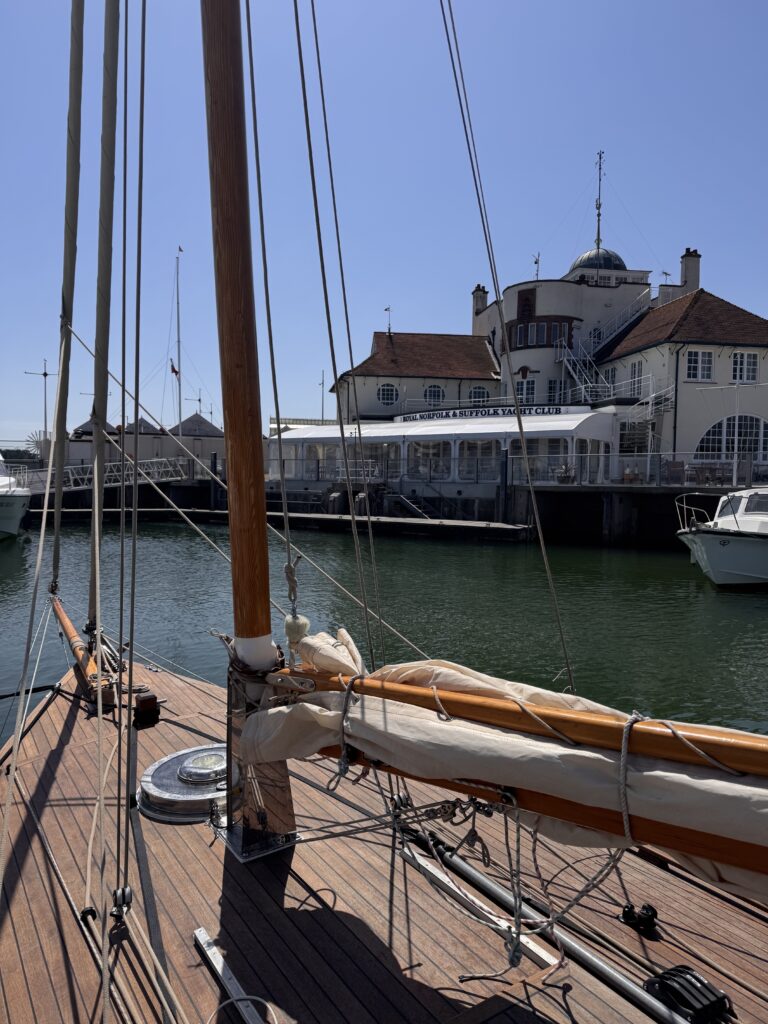
By the time we arrived in Grimsby gusts were over 30 knots. During the berthing manoeuvre Sam stepped ashore, slipped on a tangle of abandoned rope and buckets and very nearly continued straight into the dock. Thankfully he was saved by some conveniently placed lines. Grimsby itself needs no explaining. However, a happy surprise, the Club members were welcoming and generous, the bar was lively, and the drinks were remarkably inexpensive. Four days weather-bound there also allowed us a memorable train escape to York, where we visited the National Railway Museum and enjoyed luxuries that felt extravagant after life aboard: a proper mattress and a fiercely hot shower.
Grimsby to Filey Bay ~40 nm – moderate breeze
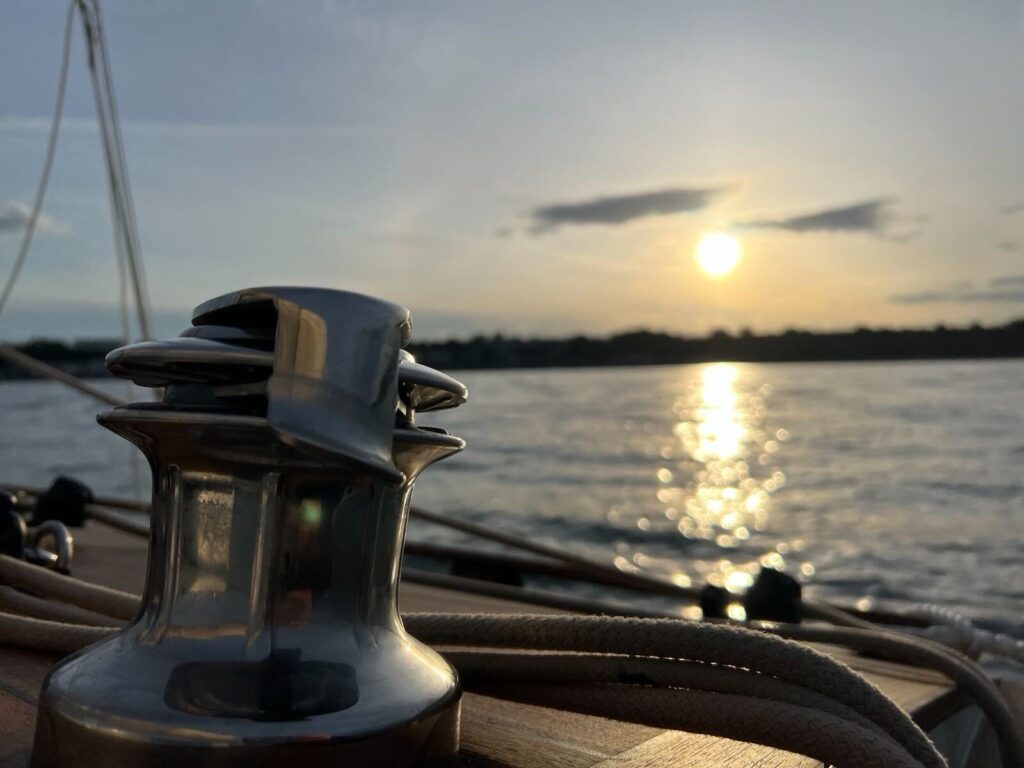
When the weather finally eased we slipped past Spurn Head with favourable tide and good early progress. Rounding Flamborough Head slowed us again as the tide turned against us, but seals and seabirds provided plenty of entertainment. Our hard-caught fish for dinner escaped on its way to the plate. Oh well, noodles for supper again! By evening we dropped anchor in Filey Bay after about forty nautical miles.
Filey to Scarborough ~6 nm
A short hop brought us to Scarborough, where persistent rain soaked everything on board. Eventually we bought a tiny electric dehumidifier – useless at sea but miraculous when plugged into shore power. Finally, dry sleeping bags! A triumph! Two damp days there also produced our next Victorian diversion: Scarborough’s famous cliff-top funicular railway.
Find ‘Acorn’ #2 on passage to her winter home at Amble here.
Words: Marie-Louise (ML) Ferrigno
You must be logged in to post a comment.